Author name: admin

World Quinoa Congress

This is a guest post from Alan Adams (’67-69) about the recently concluded Quinoa Congress which was originally scheduled for June of last year but was held in November 2025. We understand it was successful and are looking forward to the full report. Here is Alan prior post for us in March 2024. This post was initially prepared before the Congress happened.

IMG_5268.png

I am writing to the membership of Friends of Ecuador to express our deep gratitude for the support you have continued to show the Association Mushuk Yuyay in its efforts to achieve food sovereignty and economic stability in southern Ecuador.

Preparations for the IX World Quinua Congress and VI Andean Grains Symposium are moving along steadily. Transportation, housing, food details are finalized, as well as collaborations with local, provincial, and national government entities and various universities. Businesses and NGOs are also on board for a successful Congress followed by a Feria featuring several business enterprises along with Mushuk Yuyay. These are things beyond our dreams when we were in Peace Corps.

The quinua harvest is bountiful, and the farmers are proud. Of course, there are still bills to pay, and $1,000 for food expenses would go a long way. Guests will be treated to several dishes, traditional and newly developed, featuring nutritious Andean grains. Mushuk Yuyay will live up to their motto: “Health is the best business.

The activities surrounding these events will take place in Cantón Cañar in southern Ecuador, just a little north of Cuenca. The dates are November 18th through 21st, 2025. Coming up soon!

Mushuk Yuyay is community centered, locally planned and carried out, for the wellbeing of the people in the area. Mushuk Yuyay supports the viability of local family farms, and employs local workers in their processing plant, their marketing, and in their harvests. Mushuk Yuyay is effectively reversing emigration in the province.

We appreciate any contribution you can make.

This is the latest promotional video for the Quinua Congress

Here is a bit more information on the organization.

MUSHUK YUYAY: COMMUNITY LED, INDIGENOUS EFFORTS IN THE ANDES MOUNTAINS
For thousands of years, the indigenous people of the Andes mountains of southern Ecuador (the Kañari) have been growing, tending, and harvesting quinoa, amaranth, and other native grains. They have been cultivating a great many varieties of potatoes and other tubers along with squashes, vegetables, and fruit. In the face of centuries of colonialism and imperialism, the Kañari have managed to hold on to their traditional ways of caring for the earth, and feeding each other. But that does not mean their path has been an easy one; they have faced immeasurable adversity and hardship.


In the indigenous Kichwa (Quechua) language, Mushuk Yuyay means “New Thought,” and the initiative certainly lives up to its name. The Association of Producers of Seeds and Nutritious Andean Foods Mushuk Yuyay was established by Nicolás Pichazaca in 1994 to help local smallholder farmers with seed and organic inputs at a time when the farmers were struggling to survive. Since then, they have established a name brand for their products, Alli Mikuna (“Good Food”), and built a processing plant. Mushuk Yuyay sees their purpose as to holistically work with indigenous farmers to build a stable economy with food sovereignty, food security, and food justice.

According to the initiative, the needs of their community around health, food, and money,
coupled with the battle against climate change cannot be solved with one solution. As a result, they approach existing environmental, health, and economic challenges with a holistic array of programs. These include feeding and nutrition education through their Healthy Children and Healthy Future school program; ecosystem restoration through the Restorative Forest of Guyaraloma; paying farmers fair market prices in the field at harvest; community education programs with NGOs and public agencies; irrigation projects involving the area in which they operate; participatory research with universities; developing organic fertilizers and pest control with the farmers; seed selection and improvement for increased biodiversity; expanding cultivation through developing community savings and loan groups; and finally, marketing by developing their own brand, Alli Mikuna, and building a processing center.

World Quinoa Congress Read More »

Help Nico Get the Medical and Educational Support He Needs

From a current US citizen living in Ecuador, Friends of Ecuador was made aware of a fundraiser for a special needs child named Nico in Ecuador who has some health needs. There is a GoFundMe set up for Nico. The information below is from the GoFundMe page. Thus far, they’ve raised nearly $5k of the overall $12k goal.

Help Nico: Medical, Therapy & Education Support for a Brave Boy in Ecuador
 
Nico was born with Down syndrome and a serious congenital heart defect. He has already undergone open-heart surgery and continues to need ongoing therapies, medical care, and educational support. We’re raising funds to help cover these essential costs so he can grow, learn, and live a joyful, dignified life.
Nico’s Story
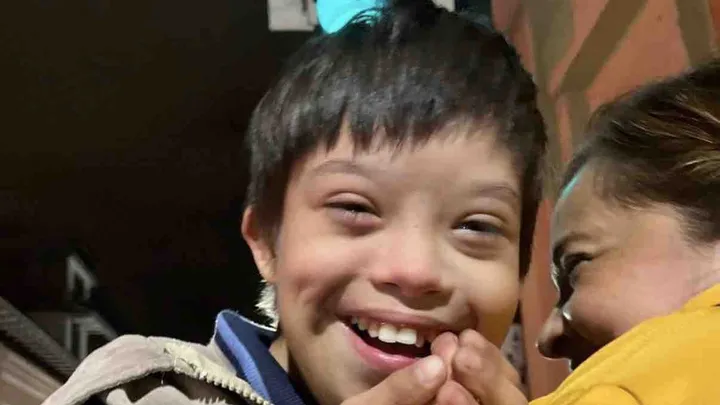
Meet Nicolás—Nico, a bright, loving 13-year-old boy from Ecuador with a smile that lights up every room.
Nico was born on April 25, 2012, after a difficult pregnancy. Soon after birth, his family learned he had Down syndrome (Trisomy 21). Not long after, they received even harder news: Nico had a congenital heart defect (atrial septal defect) and pulmonary hypertension, conditions that would require open-heart surgery before his second birthday.
Those early months were filled with hospital visits, tests, and fear. When the time came, Nico faced his surgery with incredible bravery, and he made it through. But the journey didn’t end there.
Nico Today
Nico is full of life, love, and curiosity. He works hard every single day to overcome challenges most kids never face.
He requires ongoing:
• Heart and medical check-ups
• Speech therapy
• Occupational therapy
• Physical therapy
• Educational support and learning accommodations
• Medications, lab work, and specialty evaluations
His family has done everything they can since the day he was born, but as Nico grows, his needs—and the expenses—are becoming even greater. His mother can’t work elsewhere because she attends school and therapies with him every day, and also needs to care for him at home, leaving the family with very little income to cover these essential needs.
Why We Need Your Help
Nico’s family in Ecuador does absolutely everything they can, but the financial strain has become overwhelming. This fundraiser was created to help Nico continue getting the care and learning support he deserves.
How Your Donation Helps
Your generosity will support:
• Medical expenses and specialist visits
• Speech, occupational, physical, and developmental therapies
• Follow-up testing and heart monitoring
• Educational tools, tutoring, and adaptive learning materials
• Transportation to medical and school appointments
Who Is Organizing This Campaign
This fundraiser is organized by a U.S. citizen living in Ecuador who personally knows Nico and his family. Every dollar raised will go directly to Nico’s care, with full transparency and accountability.
How You Can Help
1. Donate – Any amount makes a real difference.
2. Share – Spread the word with friends, family, and on social media.
3. Encourage – Leave a message for Nico and his family. Your words mean more than you know.
From Nico’s Family
Thank you for reading Nico’s story, for worrying and for joining us. Your kindness gives Nico the opportunity to grow, learn and get ahead. Thank you from the bottom of our hearts

Help Nico Get the Medical and Educational Support He Needs Read More »

PCV Library Project in the Galapagos

This project is just $500 short of its goal. Donate now!
Erin Charles is a Peace Corps Response Volunteer in Ecuador, serving at the first and only community library in the Galapagos Islands of Ecuador. The library works to provide educational and cultural enrichment in this remote province far from the opportunities of the mainland. Together with her counterpart, Erin designed the “Library for All” project to help reach a wider range of community members with the benefits of library programming. Read more about the project and consider contributing to this Peace Corps Partnership initiative.

PCV Library Project in the Galapagos Read More »

PCV Fundraising Project Opportunity

UPDATE: Friends of Ecuador was happy to help support Evan’s project which is now fully funded!

PCV Evan Dribbon is currently serving as a Peace Corps Volunteer in Chordeleg, Ecuador. One of the projects he’s leading is a community garden / food bank to help address malnutrition and promote healthy food access.

A few months ago, the project was approved for a PCPP grant, and I’m currently fundraising to reach the goal of $6,000. He only has about $1,000 left to raise before we can start construction.

Here’s a link to his project on the Peace Corps website if our community would like to support it.

PCV Fundraising Project Opportunity Read More »

EMERGENCY NEWS – USAID Dismantled, Litigation Pending

If you are following the news, you know that the Trump administration has ordered a 90 day freeze on foreign assistance and proposed dismantling USAID, diminishing the staff from more than 10,000 around the world to 290, all in Washington. They would like to fold the rump USAID organization in to the State Department. They are trying to put all staff on administrative leave and bring them and their families back to the US within the next month. This is all a result of Elon Musk’s having been listening to far right influencers on X, some of whom have received information influence operations. Musk has said USAID is evil and must be closed.

Secretary of State Marco Rubio has offered humanitarian waivers for life-saving programs like PEPFAR, the President’s Emergency Plan for AIDS Relief. However, those waivers require individual organizations to fill out specific paperwork and to liaise with USAID staff who have been put on administrative leave and are cut off from emails. Funding from State and CDC for PEPFAR had not resumed. These waivers, even if enacted, do not cover all services, and it is not clear that the organizations can survive this delay.

The order to put staff on administrative leave has been litigated and stayed by a judge on Friday Feb 7, but it is not clear that order will be obeyed.

Hundreds of thousands of tons of food aid is rotting in ports, $500 million worth, which could feed as many as 36 million.

Peace Corps has a separate line item of funding but works closely with USAID in countries around the world on programs in health and agriculture. USAID only recently returned in 2020 to Ecuador after a six year hiatus. The USAID website has been taken offline. A web archive of the site can be found here. The March 2024 country statement of work is here, which emphasizes that USAID was working on governance, economic inclusion, energy and environmental priorities, and citizen security.

Some key results were featured:

Peace Corps Ecuador has not yet responded to our inquiries how this has affected their work.

This outrageous turn of events is illegal and immoral. USAID cannot be dismantled except by an Act of Congress. Congressional appropriated programs cannot be be zeroed out through executive action by the President. Congress under Article 1 of the Constitution has the power of the purse. Both of these moves are likely illegal and unconstitutional.

These observations suggest that the United States is in a constitutional crisis. If you are so moved, you may want to contact your members of Congress to resist this attack on foreign assistance and U.S. democracy. There are tools out there such as 5 calls.

Below is a more detailed letter that Friends of Ecuador President directed to Senator John Cornyn of Texas.

LETTER TO SENATOR JOHN CORNYN

I wanted to thank the Senator again for his support for PEPFAR and look forward to his continued robust support.

Here is a set of materials that you might find useful to share with the Senator. They are both available here on a Box file link, as a zipped attachment, and with individual links to news articles.

There are both substantive reasons and process-based reasons why dismantling USAID and ending PEPFAR are bad ideas.

SUBSTANCE

Shuttering PEPFAR and USAID would be a catastrophic national security error, leaving the playing field to our adversaries. We should be providing more foreign assistance not less. Foreign assistance represents less than 1% of the federal budget but provides important benefits to our national security and to Americans and provides important services to millions of people around the world. More than half of the $40 billion USAID budget is dedicated to global health programs that help keep Americans safe from infectious disease like bird flu and Ebola.

Withdrawing all 10,000+ USAID officials from the field and reducing staff down to 290 staff all in Washington is what a country would do when it lost a major war, except we haven’t. It would be a self-inflicted wound. It is leading to chaos, putting at risk the lives of our foreign service officials who are now cut off from access to services that keep them safe in the field. If this reduction goes through, USAID will have 8 people in DC covering Asia. You cannot counter China with 8 people in Washington.

Our national security is at risk if we close USAID. The United States is the leading provider of foreign assistance to fragile states like Colombia who could fall back into conflict again without support. We have spent $1.7 bn since 2017 in development and security assistance to help Colombia emerge from a civil war against narco-gangs. Colombia has also accepted millions of Venezuelan migrants. If Colombia goes the way of Venezuela, more migrants will come to America.

Ending PEPFAR and USAID is immoral and hugely damaging to US credibility. PEPFAR is President George W. Bush’s signature achievement of George W. Bush and it is now at grave risk. 20 million people are on lift-extending drugs provided by PEPFAR which prevents HIV developing into full blown AIDS and killing them. Without those medications, they will ultimately die.

Secretary Rubio’s humanitarian waivers for PEPFAR from the spending freeze are not working because organizations are unable to liaise with USAID staffers who have been put on leave and cut off from email. Spending from USAID and CDC for PEPFAR has also not re-started. In addition, there is considerable confusion about what services qualify for the waiver as anti-retroviral services are often accompanied by nutrition and other services that may or may not qualify.
The freeze has also disrupted more than 30 clinical trials, forcing stop work on patients implanted with medical devices. One of those clinical trials was on a cure for AIDS.

American farmers also stand to lose from shuttering USAID. In 2020, the US government purchased more than $2.1 billion in surplus agricultural products from US farmers to support food assistance internationally. Hundreds of thousands of tons of food – worth $500 million enough to feed 36 million – have already been purchased and are stuck at ports around the world and are risk of spoilage. Texas farmers, firms, and universities (including Texas A&M, Texas Tech, among others) also stand to lose as many of them have contracts with USAID to provide services and support research on breakthroughs in medicines and agriculture.


PROCESS

Congress has the power of the purse through Article 1 of the Constitution. Funds have already been appropriated for programs. The executive can not unilaterally decide what programs to fund. USAID is also supported by Congressional statute. A recent report from the Congressional Research Service concludes that the Executive does not have the power to unilaterally close USAID and put it under the auspices of the State Department. This is likely one of the reasons why a court order today put a stay on the decision to dismantle USAID and put thousands of USAID workers on administrative leave.

While further efficiencies at USAID may be needed and some programs may need to be cut, this is a decision for the Congress to make going forward, not one for the Executive, supported by an unelected temporary employee in Elon Musk, to make unilaterally. If the Executive can decide what programs to fund after Congress has already appropriated the funds, this vitiates the role of the Legislative Branch, making it almost entirely superfluous. This is a Constitutional crisis and the Legislative branch needs to defends its responsibilities.

Even if we were to embrace the notion that USAID needs significant reform, abruptly shutting off programming and pulling back USAID staff precipitously is not the way to do it. This is about the worst way one could possibly try to restructure the program. Indeed, PEPFAR was already in the process of trying to shift to more country ownership of programs so that they would be self-funded by the countries themselves. This will likely cause all or most of them to fail abruptly.

I appreciate your consideration of these points, and I would be happy to answer any further questions.

Sincerely,
Josh Busby
Professor, LBJ School of Public Affairs
University of Texas-Austin

EMERGENCY NEWS – USAID Dismantled, Litigation Pending Read More »

Long-Time Friend of Ecuador now working in Zambia – Project Appeal

For many years, Hans Gotz worked as a development worker in Ecuador. In the late 1990s, he worked with Friends of Ecuador president Josh Busby on organic quinoa export to the United States. He’s now working in Zambia with Bread for the World on a community project and is seeking help to support community projects there. This is a guest post from Hans.

We urgently need water in the Chilobwe community in Kalulushi, Zambia, Africa.

  • A borehole with a 55m liner costs 2300USD + hand pump 450USD + installation and materials about 200USD.
  • In the second phase we would like to install a solar pump with batteries and an elevated tank.

Please let me tell you about that:
We have decided to finish my cycle of work as I started as a development worker, now with Bread for the World. For the past year we have been working with Adriana here in Zambia at the Mindolo Ecumenical Foundation (MEF), a very well-known institution in Zambia and Africa for its 65 years of training and capacity building in many different areas.

Due to the needs of the people (at the moment there is a terrible famine due to the worst drought in many decades) they have decided to expand the training to include sustainable, resilient agriculture. We have a training farm where 60 students are currently living and working. To implement this training and to develop the training farm, Bread for the World sent me (similar to my work with Escuelas Radiofonicas del Ecuador (ERPE).

MEF gave 117 families 3 hectares of land each, thinking they could improve their living conditions, but the people don’t know anything about farming, they burn to plant a little maize in monoculture and mainly cut down all the trees/bushes to make charcol for sale. Most of them only eat once a day, they have to walk long distances to fetch water, the school is far away.

This is my third line of action with MEF to help this community develop. We are training the young people on the farm, some friends from Germany are funding a trainer to live in the community, work with the people and build a model house with his wife and child. We have 3ha of community land where we have started to develop a community centre.

We have dug a 15m hand well but unfortunately it has dried up, digging deeper is too dangerous or requires a high investment in casing.

We did a technical study with experts and found another spot in the communal area where we should see abundant water, ideal for the borehole.

The community is very committed to the work, they have made more than 3000 bricks by hand for the trainer’s house, and they are working hard with him in the field, preparing for the planting of the new PFUMVUDZA or family plots system, because we must plant before 25.11.2024.

But we need water, we need the watering hole!

Please help us raise funds. A GoFundMe page has been set up here with the appeal for support. Please help if you can!

If you have questions about the project, feel free to reach out to Hans directly via email.


Long-Time Friend of Ecuador now working in Zambia – Project Appeal Read More »

Skills-based Volunteering in Kenya, Tanzania, and Liberia

Hello Friends of Ecuador, F2F A2F Recruitment Brochure IESC F2F A2F General Factsheet

I hope you are doing well. My name is Rachel Hyman, and I work with the USAID-funded Farmer-to-Farmer Access to Finance Program (F2F A2F) at IESC. We work with volunteer experts to provide technical assistance to financial institutes and agricultural businesses in Kenya, Tanzania, and Liberia. You can find more information about our program on the attached brochure and fact sheet.

I’m reaching out because I believe our program is very relevant to your organization’s values and the interests of your members, and we are hoping to connect with professionals interested in volunteering to enhance access to finance for smallholder farmers, women, and youth in our core countries. We are looking for volunteers representing a wide variety of fields and skill sets. These include (but are not limited to) business development, banking and finance, marketing, economics, strategic planning, factory management, agronomy, resource mobilization, financial management, human resources, etc.

If there is anyone in your organization who may be interested in our program, I would greatly appreciate being connected! Likewise, if there is any general interest, I would love to explore an avenue for sharing upcoming volunteer assignments with your organization.

If you have any questions, please don’t hesitate to ask. Thank you for your time.

Best,  Rachel Hyman

Factsheet

Brochure


Skills-based Volunteering in Kenya, Tanzania, and Liberia Read More »

Renewed Fundraising Appeal – World Quinoa Congress

This is a guest post from Alan Adams, Asesor Internacional, Mushuk Yuyay

Last spring, we posted a story on Mushuk Yuyay and our efforts to fundraise to support them. We only raised about $100. Please consider a donation. We’re hoping to raise at least $1500 to support a Field Day showing off the Mushuk Yuyay experimental farm and all of the crops available there. If you like to donate to Mushuk via Friends, you can visit Friends of Ecuador’s Donate page and PayPal link.

Mushuk Yuyay in Cañar, Ecuador will host the IX World Quinua Congress on June 17, 18, 19 & 20 of 2025 to coincide with the Inti Raymi celebration. This will be the biggest event in the history of Cañar with universities, NGOs, businesses, government agencies, marketers and tourists participating. Musicians, artists, dancers, performers of every kind will make the festivities bright and exciting. There will be new and traditional foods, including quinua pasta, quinua and amaranth bread, amaranth energy bars, and much more besides the foods that Returned Peace Corps Volunteers remember and love about the Sierra. This will also be a community event featuring the farmers and local crafters, but most of all, you will see the astounding transformation that the people themselves have brought about over the past few decades.

Mushuk Yuyay would like Friends of Ecuador to be an essential part of this World Quinua Congress by helping to sponsor a vital component of the program. Over the years, Friends of Ecuador has helped Mushuk Yuyay while the association was struggling to stay alive. Now Mushuk Yuyay is a growing economic and social force in southern Ecuador. Now, we are hoping that Friends of Ecuador will be put their name on the Field Day at the Mushuk Yuyay experimental farm, Finca La Posta, to demonstrate the advances in agroecological cultivation of quinua and other crops for the health and stability of the region. It is projected that 350 attendees will participate in this activity. The total cost of this event will be $2,100. We are asking Friends of Ecuador to provide just half, $1,500, by the end of 2024, to make the Field Day possible.

I am always available to answer any questions. Please check Mushuk Yuyay out at MushukYuyay.org or Associación Mushuk Yuyay on Facebook.


Renewed Fundraising Appeal – World Quinoa Congress Read More »

Ecuador Grappling with Blackouts

Ecuador grapples with 14-hour blackouts, climate change, and alleged corruption

Worrisome news of blackouts in Ecuador: “Since mid-September 2024, Ecuador has been experiencing power outages, up to 14 hours per day, across its entire territory.”

Some of it appears to be related to droughts which are affecting hydroelectric produciton: “According to the Ecuadorian digital media organization La Defensa, chats between Arrobo and Noboa reveal that the Minister of Energy warned President Noboa that droughts and limited rainfall would affect the hydroelectric plants, which provide the majority of Ecuador’s electricity. Most hydroelectric energy production depends on rainwater flow as the plants require a base amount of water to spin the turbines that generate electricity. Arrobo stressed to him that if the drought continued, the hydroelectric plants “will not hold up.”

Ecuador Grappling with Blackouts Read More »

Scroll to Top